Puritan Roots and the Founding of Wallingford (1620–1675)

The story of First Congregational begins across the Atlantic. In the 1620s, as the English crown grew hostile to Puritan religious practice, thousands emigrated to New England to establish what they called a “Zion in the wilderness.” Among the ministers who came were Thomas Hooker, who founded the Connecticut River Colony in 1636, and John Davenport, who established a colony at New Haven in 1638. Davenport’s colony purchased land from local Indian sachems, including a tract that would eventually become Wallingford.

In 1662, Connecticut secured a royal charter that absorbed New Haven into the Connecticut Colony. Eight years later, with New Haven’s population pressing outward, the General Assembly authorized a new settlement. In April of 1670, thirty-one men, thirty women, and forty children set out northward and founded Wallingford. Five years later, in 1675, the congregation that would become First Congregational Church was formally gathered — and from the very beginning, church and town were one.
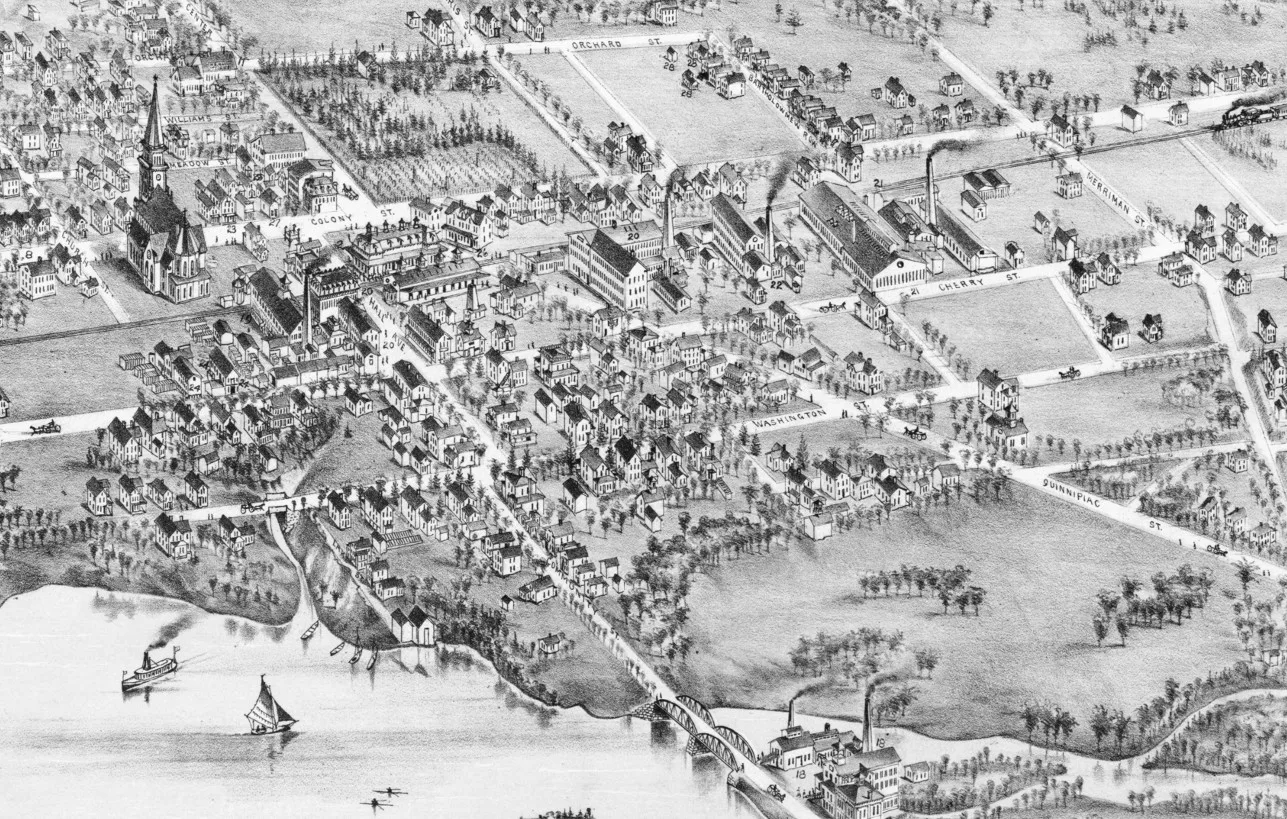
An early map of Wallingford, CT.

One Institution, Two Names (1675–1718)

In early Wallingford, the distinction between church and civil government was essentially nonexistent. All voters were required to be church members. The town meeting and the church meeting were the same meeting. The state upheld the church’s spiritual decrees; the church enforced the state’s civil laws. The Congregational church was, in every practical sense, the government of the Connecticut colony.

The congregation’s first ordained minister, the Reverend Samuel Street, arrived in 1673, summoned by the town’s very first tax, which was levied specifically to fund his salary. He would serve for forty years, establishing a pattern of long ministerial tenure that has defined the church ever since. In its 350-year history, First Congregational has been led by only eighteen pastors, averaging more than twenty years each. Captain Thomas Yale, a member of the family that lent its name to the university, was among the church’s original founders.

Worship in those early decades was demanding. The first meeting house — completed in 1681, a rough log structure near what is now Simpson Court — had no windows, no pews, and barely sufficient walls to keep out a Connecticut winter. Services began at eight in the morning: an hour of standing prayer, psalm singings, and a sermon timed by an hourglass. Women carried foot stoves filled with coals from home. Men with bald heads were known to put on mittens.

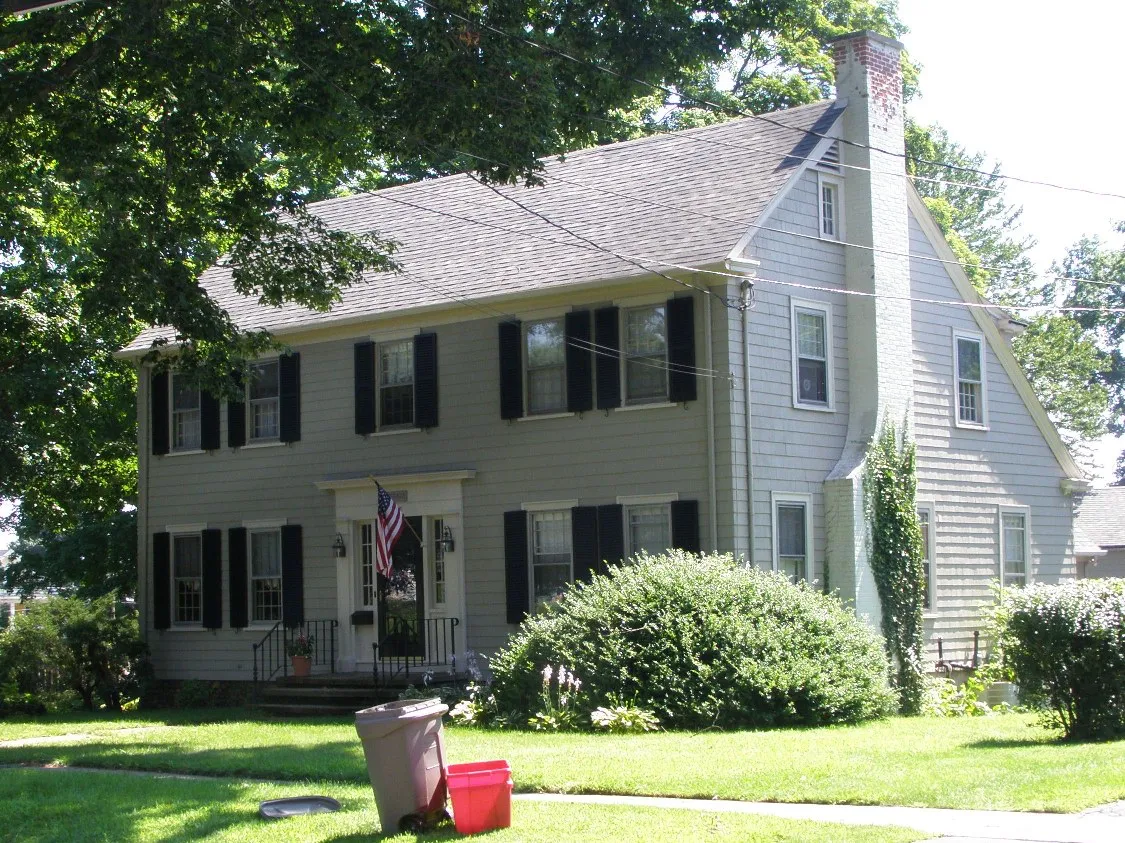
You can still find Rev. Samuel Street’s historic home in Wallingford today

Growth, Division, and the Great Awakening (1718–1758)

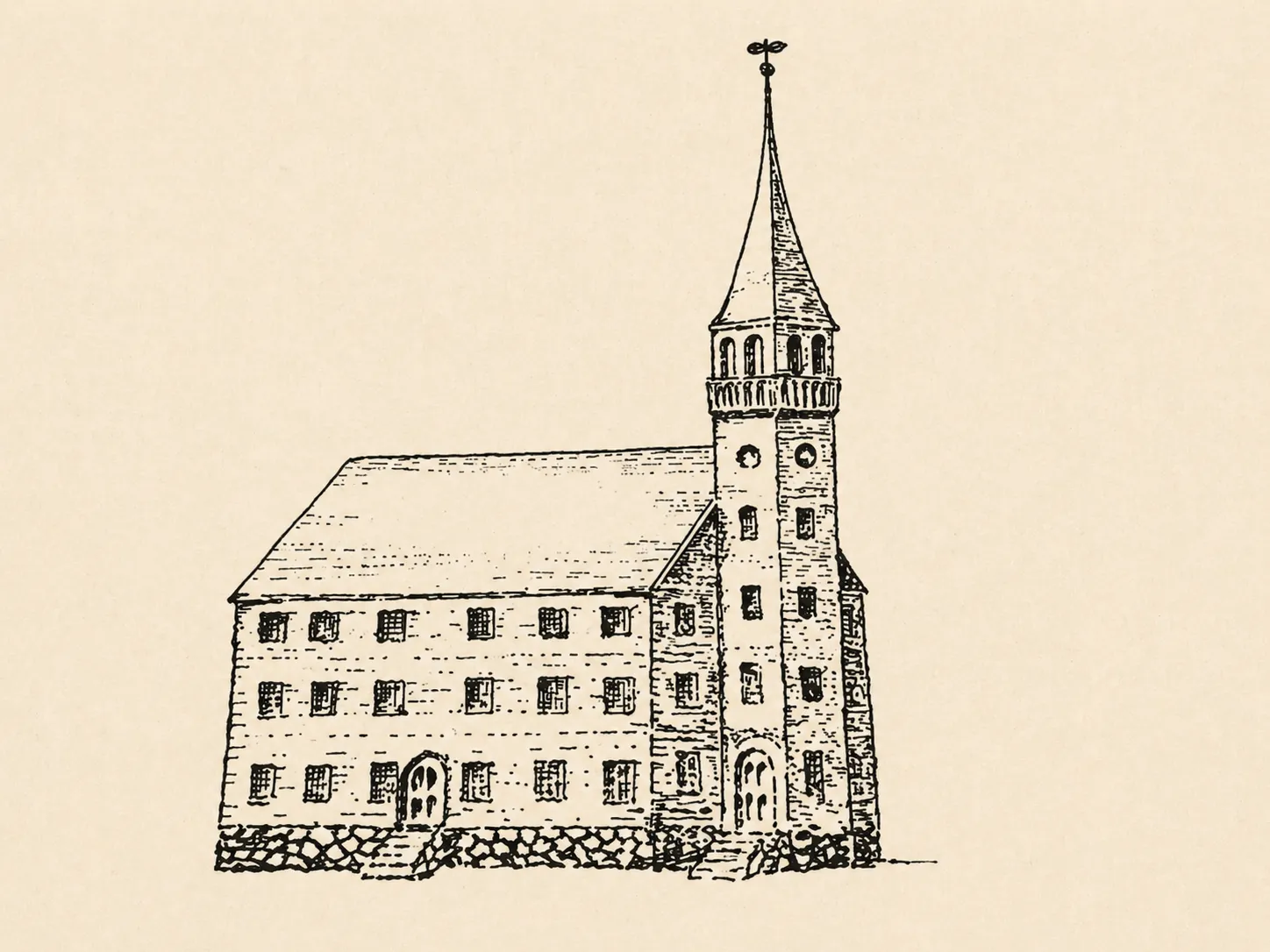
By 1720, Wallingford’s population had grown from its original 100 settlers to over 1,100, and the congregation built a proper three-story meeting house modeled after the “Old South” church in Boston. Seating was assigned by committee according to wealth, rank, and age. As the town’s outer territories grew, neighboring parishes in Cheshire and Meriden eventually split off to form their own congregations — just as those communities would later split off to become their own towns.

The religious monopoly began showing cracks in 1735, when ten families left to become Baptists. Then, beginning in 1739, the Great Awakening swept through the colonies. The revival divided congregations between “Old Lights” — who valued theological order and rationalism — and “New Lights,” who embraced experiential, emotional faith. When change was challenged, New Light members often left and founded their own Separatist Churches. Wallingford held together through the steady hand of Reverend Whittlesey, though he privately worried about what he called “a latent spirit of strife” among his people.

When Whittlesey died in 1752 after thirty-five years of ministry, those divisions surfaced fully. It took six years to call a successor. The man finally chosen — twenty-three-year-old James Dana, a Harvard graduate — proved deeply polarizing. His interviews with skeptical committee members went badly, his personality grating and his theology suspect. He was ordained anyway, 140 votes to 62, and the dispute that followed became known as the Wallingford Controversy: a clash between those who believed an outside consociation had authority over the church and those who insisted the congregation was autonomous. Dana finally assumed the full ministry on October 2, 1758.

Archival sketch of the 1720 meetinghouse

Revolution, Politics, and a Changing Republic (1758–1825)

The controversies of the Great Awakening had introduced something new into colonial life: the idea that it was legitimate, within limits, to question authority. That spirit fed directly into the Revolution. Reverend Dana was an early and vocal patriot. In November of 1774, he made a patriotic address urging support for the people of Boston, and he was later a guest at a dinner with Commander-in-Chief George Washington, who was passing through on his way to Boston.

The Revolutionary era also accelerated the erosion of the church-state arrangement that had governed New England since the Puritans. Both the United States Constitution and pressure within Connecticut made the old system increasingly untenable. By 1816, the Democratic-Republican Party — known in Connecticut as the Toleration Party — had gained enough influence to force the issue. In 1818, a state constitutional convention was convened, and the new constitution completely dissolved the relationship between the State of Connecticut and the Congregational Church. Taxes would no longer fund church maintenance. The financial difficulties that followed were real, but the church adapted.

Reverend Dana’s ministry ended with his departure for First Church in New Haven. He was succeeded by Reverend Noyes, who served from 1785 until his resignation in 1832 — forty-seven years. In all that time, illness prevented him from preaching on only two Sabbaths. He continued to live in the home provided by the church until his death in 1844.

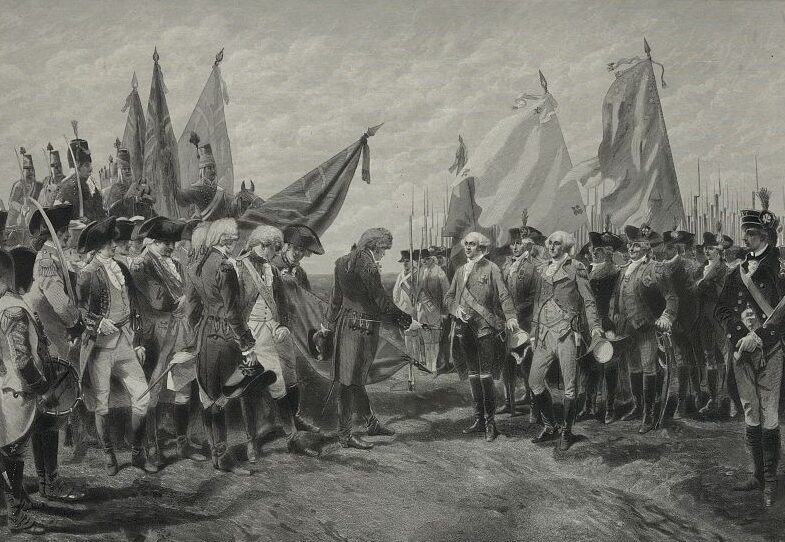
The surrender of British troops to General George Washington

A New Building and a More Formal Church (1825–1869)

In 1825, the 1720 meetinghouse was replaced. The cornerstone of the fourth meeting house was laid on June 1, 1826, and the first service was held on June 14 of that year — the first meetinghouse the congregation had ever occupied with any kind of heat available. It was a meaningful comfort after nearly 150 years of frozen Sabbaths.

Reverend Noyes’s successor, Edwin Randolph Gilbert, was ordained in 1832 and served for forty-four years, until his death in 1874. His tenure was among the most formative in the church’s history. Gilbert insisted on rigorous adherence to the Ten Commandments; members who fell short were sometimes excommunicated. He designated frequent “Church Fast” days of self-examination and prayer. He established the church’s first Sunday School on September 19, 1839, and Bible classes began in 1843. The most significant event of his long ministry was the construction of a new church building in 1868.

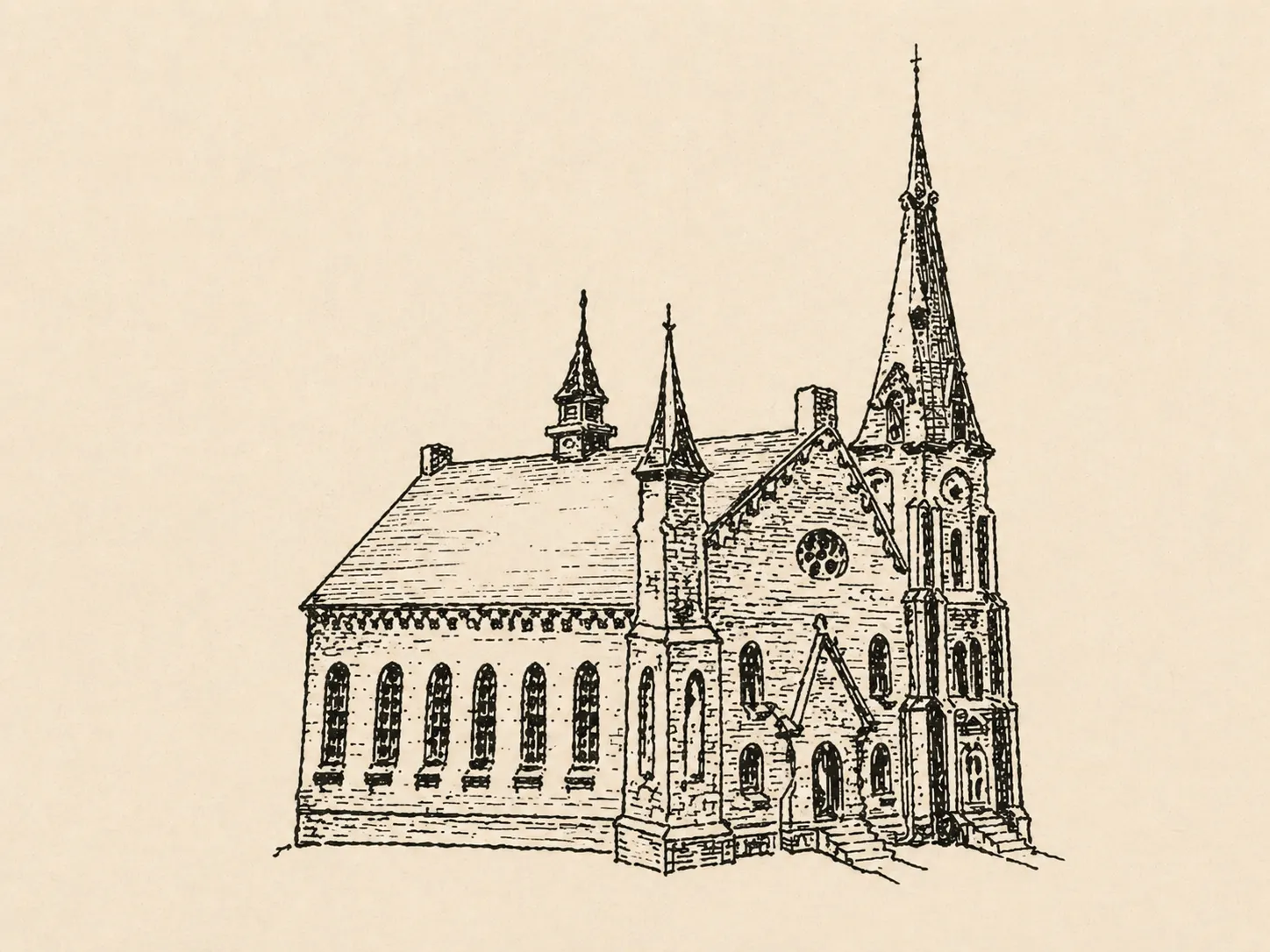
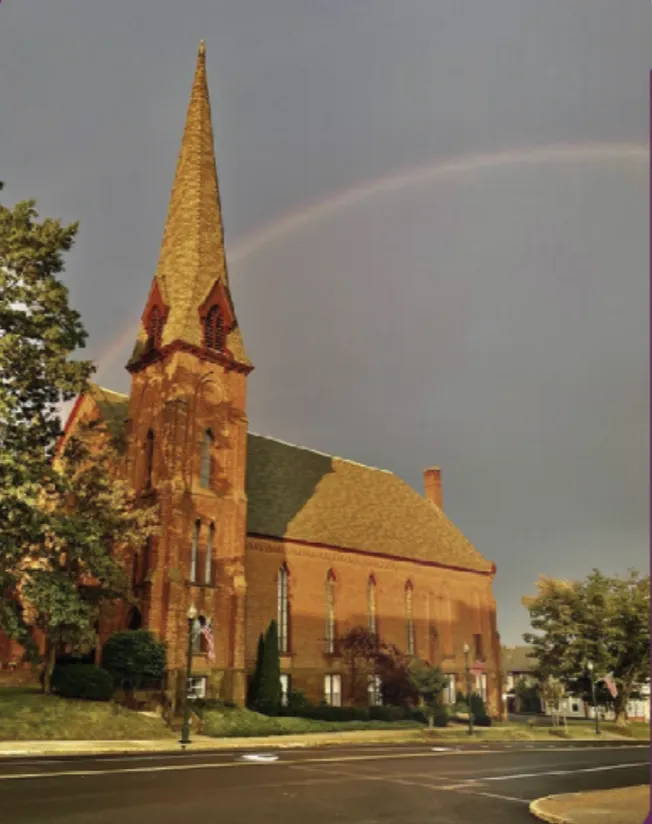
That building — the present one — opened on May 21, 1869, at a total cost of $40,000. Constructed of brick rather than wood, as was the architectural style of the post-Civil War era, it sits at the corner of South Main and Center Streets, where it has defined the visual center of downtown Wallingford ever since. It is the fifth building the congregation has occupied on or near that site.

Archival sketch of the 1868 meetinghouse – the building we still meet in today!

A Church in the Life of a Growing Town (1869–1950)

By 1875, Wallingford’s population had reached approximately 3,700, and the church had a membership of around 400. By 1900, the town’s population had risen to over 9,000. In 1918, when the worst influenza epidemic in modern history swept the world, the church’s parlors were converted into a temporary hospital. When Connecticut held its Tercentenary Celebration in 1935, the church placed a large boulder on its lawn with a bronze plate listing the thirty-eight men who had signed the Plantation Covenant in 1669.

In 1910, when the Boy Scouts of America was formally founded, First Congregational was among the very first churches in the country to sponsor a troop. That troop has remained at the church for over a hundred years. The congregation also ran rummage sales twice a year to send clothing overseas, organized summer camp programs and mission trips for children, and has hosted community dinners and fundraising events throughout its history.

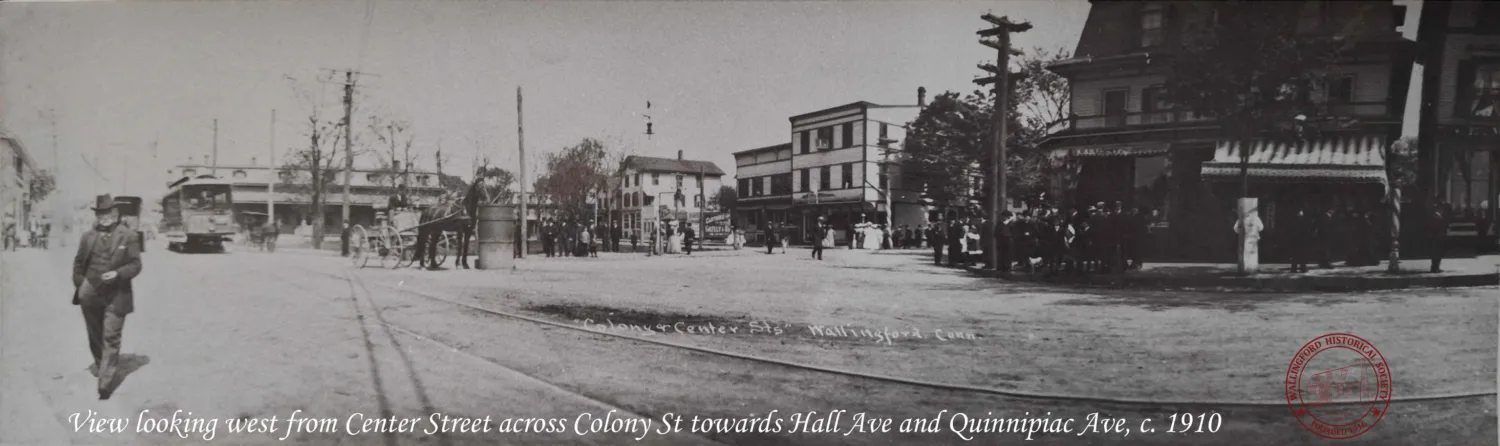
Downtown Wallingford in the early 1900s

Two Fires and a Rebuilt Interior (1952–1963)

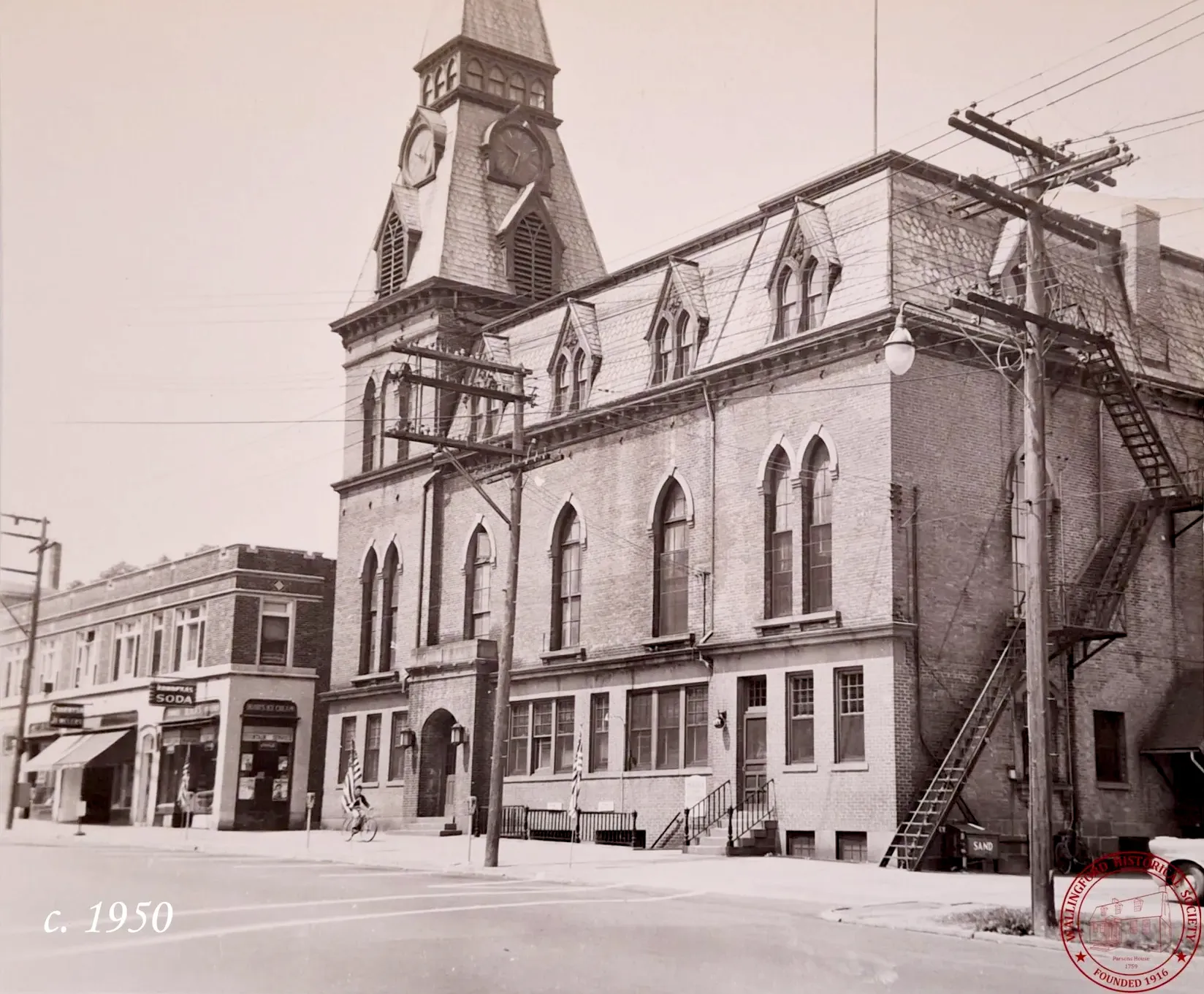
The twentieth century brought two serious crises to the building. On January 25, 1952, a fire raged through the church, causing $220,000 in damage. The congregation relocated worship services to the Choate School chapel while rebuilding took place. An addition connecting the church to the parish house next door was completed in 1954. Then, in 1963, fire struck again. This time, worship services moved to Lyman Hall High School — the building now known as Wallingford Town Hall — while the interior was rebuilt a second time.

Longtime member Bob Westervelt was a teenager during the second fire and rushed in to help recover what he could. He still remembers the heat: the candles on the candlesticks he carried from the altar had bent over from the warmth.

First Congregational Church of Wallingford today

350 Years On

The church that began as a handful of colonists gathering in one another’s homes now marks 350 years of continuous presence in Wallingford. The town’s population, which stood at 100 in 1670, reached 36,000 by 1969 and has continued to grow. The congregation has changed with it — moving far from its strict Calvinist origins, today openly welcoming people of all backgrounds, beliefs, and identities.

Like most American churches, First Congregational has faced declining attendance in the years since the COVID pandemic. But its members remain clear-eyed about what the church offers that few other institutions can: genuine community, rooted in something older than any of its current members. “One of the things people talk about now is being spiritual but not religious,” said Sue Phipps, a lifelong member and direct descendant of founder Nathaniel Merriman. “Being religious just means you’re being spiritual in community. We’ve taken that community part out of it today — and that’s something the church can offer the world that just isn’t being offered in other settings anymore.”

What has not changed is the building’s location — still at the corner of South Main and Center, still at the center of Wallingford — and the conviction, held since 1675, that faith is not a private matter but a public one, practiced in the company of neighbors.

Sources: Charles Davis, History of Wallingford (1870); First Congregational Church 300th Anniversary Booklet; Steve Knight, Wallingford Magazine (Holiday 2025); Record-Journal, January 2025.